
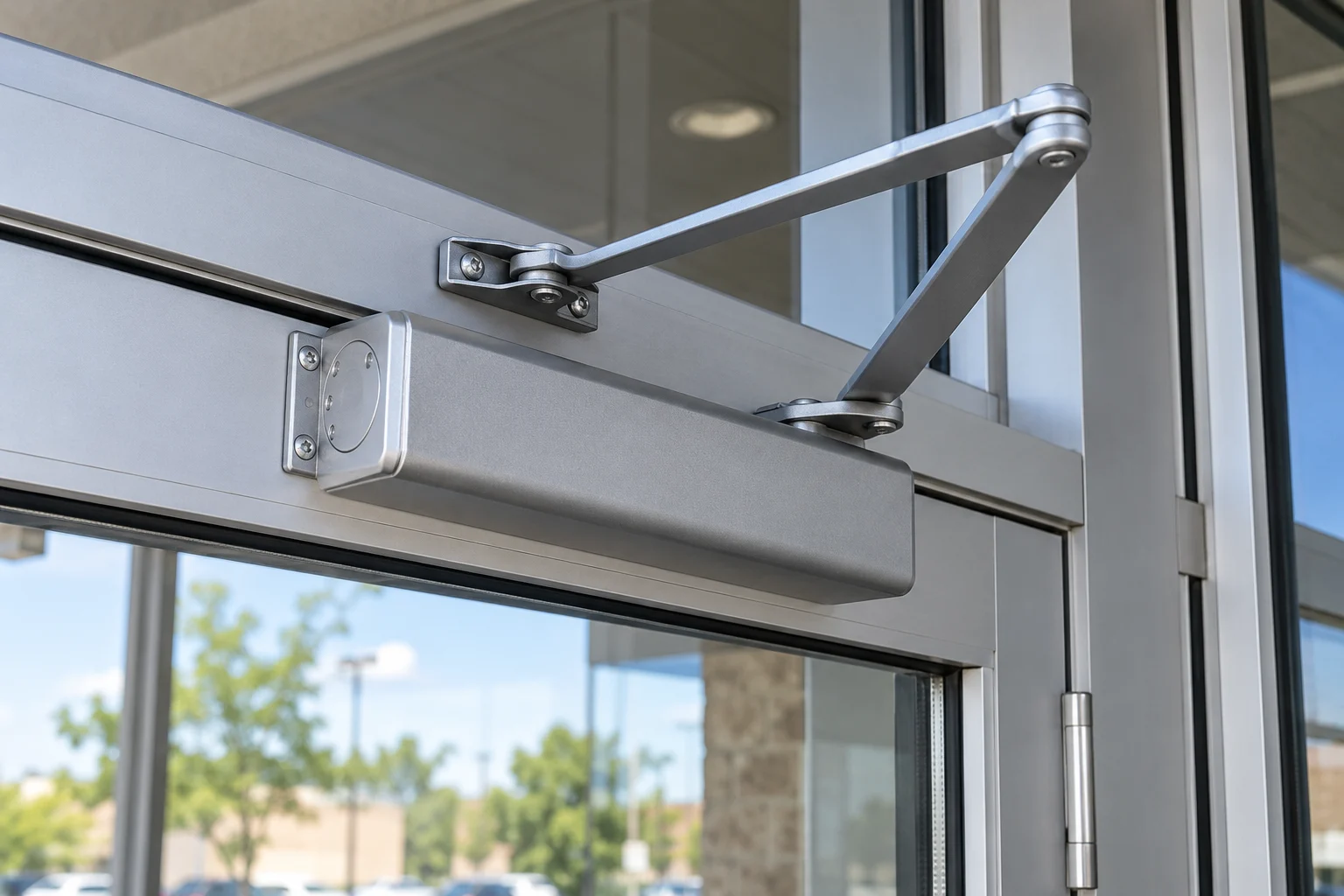
How we help
Stop the slamming, dragging and doors left ajar. We inspect the closer, hinges and latch together to find the adjustment, repair or replacement your entrance needs.
Common situations
- Door slams shut too hard
- Door no longer closes and latches on its own
- Closer leaking oil onto the floor
- Door too heavy for older visitors to open
What the service includes
- 01The door is watched closing from fully open to note where it speeds up, stalls or fails to latch, and the closer body is checked for oil.
- 02On a sound closer, the sweep, latch and backcheck valves are adjusted in small turns and spring power is checked for the door size.
- 03On a leaking or broken closer, it is removed and a new closer is installed with the correct arm (regular, parallel or top jamb) for the door swing.
- 04Spring and valves are set so the door closes in a controlled way and latches without slamming.
- 05The door is cycled repeatedly to check that the latch, panic bar or lock engages each time.
Typical time: 30-90 minutes per door
Options
- Valve and spring adjustment
- Sweep, latch and backcheck tuned on a sound closer.
- Grade 1 replacement closer
- LCN 4040XP/4041, 4110/4111 or a Norton heavy-duty model for busy doors.
- Arm change
- Regular, parallel or top jamb arm to suit the door swing and frame.
- Hold-open arm
- Holds a door open on purpose; on fire doors only with alarm-released devices.
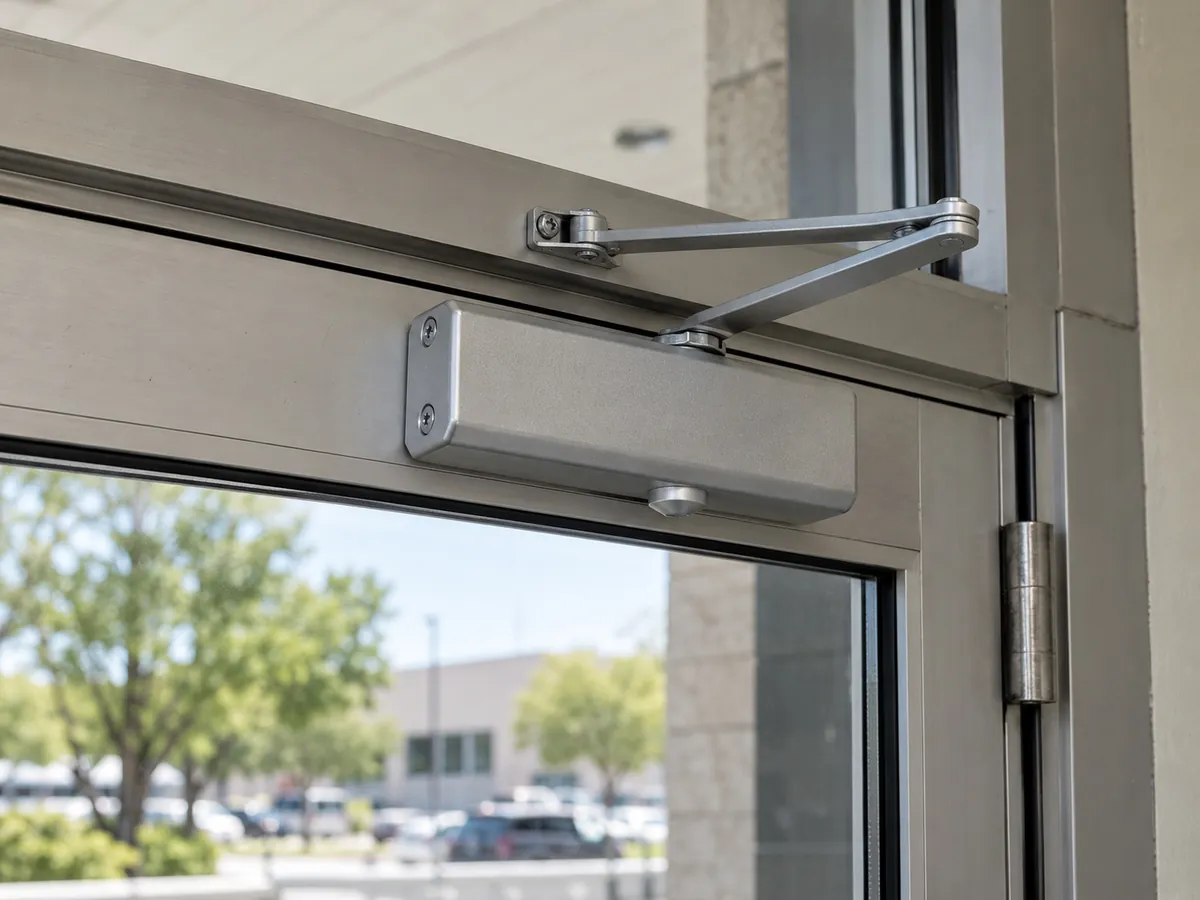
Door closers we install
Compatibility and limits
- A closer that leaks oil cannot be fixed by adjustment and must be replaced.
- Fire-rated doors generally may only be held open by devices that release on fire alarm.
- Accessibility rules limit opening force on many doors.
Which door closer is right for a commercial door?
Read the answer
For busy commercial doors, a Grade 1 closer such as the LCN 4040XP/4041 or 4110/4111 series, or a Norton heavy-duty model, is a long-lasting choice. Builder-grade closers that work fine on a back office often fail fast on a lobby or restaurant door.
The arm matters as much as the closer. A regular arm mounts on the push side, a parallel arm on the pull side so it is not exposed outside, and top jamb mounting suits narrow frames. Exterior out-swinging doors usually need a parallel arm with a heavy-duty bracket.
Hold-open arms keep a door open on purpose; on fire-rated doors that is generally only allowed with hold-opens that release when the fire alarm activates. Check with the building's fire safety director before adding one.
Common questions
Can my closer be adjusted instead of replaced?
Yes, if it is not leaking oil and the arm is not damaged. Adjustment is quick and costs much less. A leaking closer has to be replaced.
How long does a door closer last?
It depends on traffic, quality and adjustment. A Grade 1 commercial closer on a properly adjusted door can last many years, while builder-grade units on busy doors fail sooner.
Can a closer hold the door open?
Yes, with a hold-open arm. Fire-rated doors generally may only be held open by devices that release on fire alarm, so check with your building first.
Why does my door close but not latch?
Usually the latch speed is too slow or the strike is out of line. Both can be adjusted, and sometimes the lock latch itself is worn.
Can closers go on apartment entry doors?
Yes, including residential apartment doors and attached garage entry doors. The closer size and arm should match the door.