
How we help
Free security assessment in Minneapolis: we review doors, locks, visitor entry and camera coverage, then recommend what to fix first and what it costs.
Who it's for
- Small businesses after a break-in or attempted break-in
- New owners of a building or storefront who do not know who still holds keys
- Landlords between tenants and managing agents planning a capital budget
- Homeowners after burglaries in the neighborhood
Suitable properties
- Retail storefront
- Door, gate, glass, cash points, camera coverage and alarm communicator.
- Prewar walk-up (3-20 units)
- Street door latching and closer, intercom release, mailroom, roof and cellar doors, and who holds master keys.
- Office suite
- Suite entrance hardware, key and credential lists after staff turnover, and camera coverage of shared areas.
- House
- Every exterior door and frame, strike screws, basement and garage entries, and alarm zones.
Main options
- Door and lock review
- Doors, frames, strikes, hinges, glass near locks and whether bolts fully throw.
- Key control review
- Restricted keyways, likely copies in circulation, and the state of any master key system.
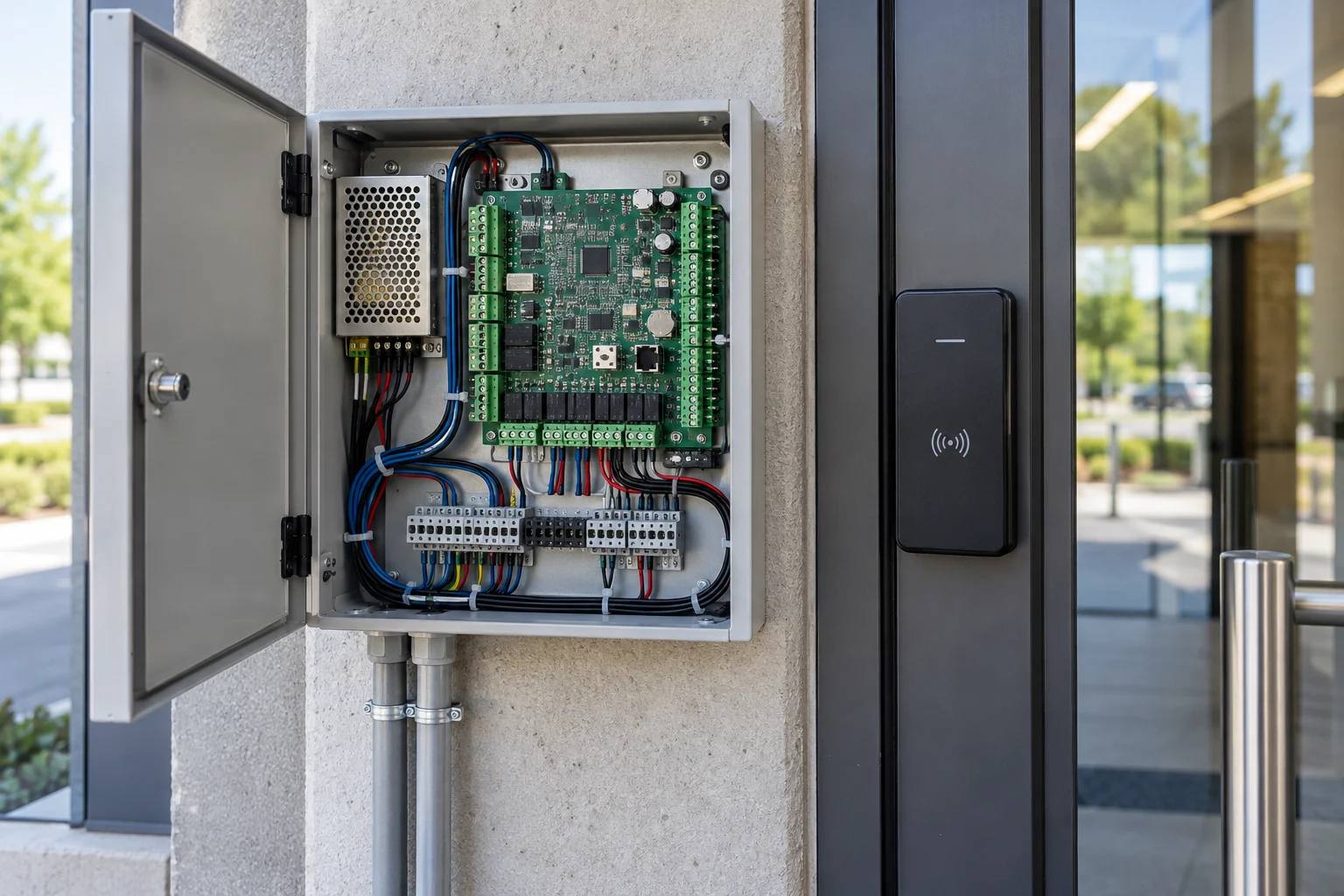
- Electronic systems review
- Camera views and retention, alarm zones and communicator, intercom and access control settings, stale credentials.
Survey, installation and support
- 01The survey starts from your main concern: a break-in, a new property, a tenant turnover or an insurance requirement.
- 02A walk-through covers every entry point, inside and out, along with key control, cameras, alarm and access control.
- 03Findings are analyzed and ranked high, medium or low risk, each with a recommended fix.
- 04You receive a written report with photos where they help, and a separate itemized price for each fix you may want.
- 05A walk-through of the report answers questions and helps you decide what to do now and what to plan for later.
- 06Chosen fixes are scheduled and completed, and the property can be rechecked afterward.
Typical timeline: 30-90 minutes on site, followed by a written report
Compatibility and limits
- An assessment identifies risks and fixes; it is not a code inspection or a legal compliance review.
- Renters can usually act only on their own unit; building-level issues go to management.
What should the written report include?
Read the answer
A useful report is short, not a sales brochure. Each finding states the issue, why it matters and the recommended fix, ranked high, medium or low risk. Photos are included where they help explain the issue.
Each recommendation should carry its own price, so you can fix the high-risk items now and plan the rest. Many owners use the report for budgeting or to share with a co-op board, landlord or insurer.
Common questions
Am I obligated to buy anything after the assessment?
No. The report is yours, and each recommended fix is priced separately, so you can do some, all or none of them, or hand the report to another contractor.
How long does the assessment take?
Usually 30 to 90 minutes on site, depending on the number of doors and systems, followed by the written report.
Can commercial buildings and storefronts be assessed?
Yes. Stores, offices, warehouses, apartment buildings and private homes all follow the same physical, key control and electronic review.
Can I use the report for my insurer or co-op board?
Yes. A plain-language report with photos is suitable to share with insurers, boards and managing agents.
Are cameras and the alarm checked too?
Yes. Camera coverage and retention, alarm zones and communicator, and access control settings are reviewed along with locks and doors.